
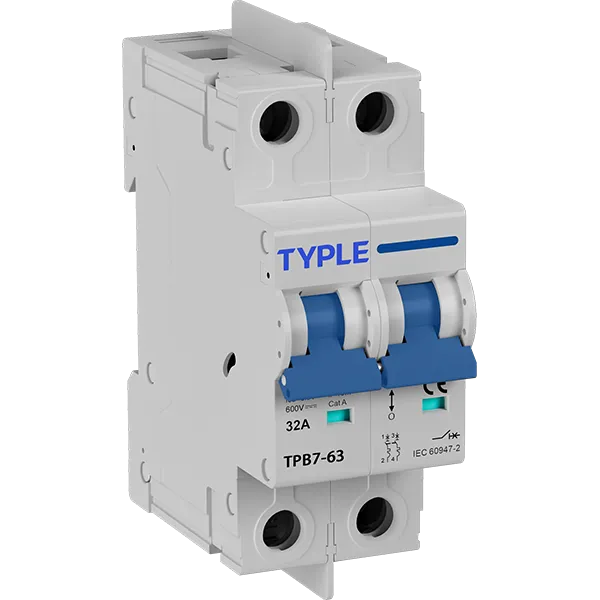
A miniature circuit breaker is an automatic electrical switch that protects a circuit from damage caused by overloads or short circuits. When current rises above a safe level, the device opens the circuit on its own. This automatic action limits damage to wiring and equipment, and it happens fast enough to matter.
The same unit then resets by hand once the fault is cleared. Inside, two triggers share the job: a thermal element that responds to sustained overload and a magnetic element that reacts to a sudden short circuit. Understanding these triggers, the main types, and the selection rules makes it easier to specify the right protection for any panel.
What Is a Miniature Circuit Breaker?
Definition and Role
A miniature circuit breaker is an automatically operated switch that trips when current rises above a safe level. It responds to two conditions: electrical overloads and short circuits. Once the fault is cleared, the device resets by hand and the circuit is ready to run again. That reset feature separates it from one-time protective devices.
The role of an MCB in a panel is straightforward. It sits between the incoming supply and the wiring it guards. In a home, a mini circuit breaker might protect a lighting circuit or a socket outlet. In a commercial building, MCBs guard distribution boards that feed offices and equipment. In an industrial panel, they protect control circuits and small motor branches. Each device provides overload protection for sustained excess current and short circuit protection for sudden high-current faults. Together these functions deliver overcurrent protection for the circuit behind it.
The device also gives fault protection a visible, manual layer. A technician can switch a circuit off for maintenance, then restore it after the work is done. That dual role — automatic trip and manual control — makes the MCB a common choice in modern panels.
Circuit Breaker vs. Fuse
An MCB is often confused with a fuse, and the two do share a job. Both open a circuit when current exceeds a safe level. The difference lies in what happens next. A fuse contains a metal element that melts under excess current. That action is fast and reliable, but the fuse is spent once it operates. A circuit breaker trips a latch and opens contacts instead. No part is consumed, so the unit can be reset and reused.
Where does each fit best? Fuses suit applications where a low-cost, one-time device is acceptable, and they remain common in some equipment and utility settings. Circuit breakers fit panels where repeated faults are expected or where quick restoration matters. Neither option is better in every case. The choice depends on the panel design, the maintenance plan, and the fault levels involved.
One practical point deserves attention. A tripped miniature circuit breaker should not be reset until the cause is found. Repeated resetting into a live fault stresses the wiring and the device. The same caution applies to fuses: a blown fuse signals a problem worth investigating. Correct selection of either device starts with knowing the load and the fault current it may face.
How Does an MCB Work?
Thermal and Magnetic Triggers
A thermal-magnetic mcb combines two sensing elements in one housing. Each element watches the current and responds to a different kind of problem.
The thermal element handles overload conditions. Current flows through a bimetallic strip, a sandwich of two metals bonded together. The two metals expand at different rates when heated. Rising current warms the strip, and the strip bends toward the side with the slower-expanding metal. A sustained overload gives the strip time to bend far enough to act. This is thermal tripping, and it protects wiring from slow, steady heating.
The magnetic element handles short circuits. A coil sits in the current path, and a strong pulse of current creates a strong magnetic field around it. That field pulls a plunger or armature with enough force to release the latch at once. Magnetic tripping ignores small currents and reacts only to a large surge. The two triggers together cover both slow overloads and fast short circuits.
The Tripping Mechanism
The internal current path is short and direct. Current enters the top terminal, passes through the bimetallic strip and the magnetic coil, then leaves through the bottom terminal. The contacts sit in this path, held closed by a latch. A spring stays compressed behind the latch and waits for release.
The sequence of circuit disconnection runs as follows:
- Current rises above the safe level, either gradually or in a surge.
- The thermal element bends, or the magnetic element pulls its plunger.
- The moving part strikes the latch and frees it.
- The spring snaps the contacts apart.
- An arc forms as the contacts separate, and an arc chute splits and cools it.
The arc chute matters. It is a stack of metal plates that divides the arc into short segments and quenches it before the arc can damage the contacts. This electromagnetic operation happens in a fraction of a second under short-circuit conditions, which limits stress on the wiring.
A small lever links the trip mechanism to the front toggle. After a trip, the toggle sits in a middle position, so the user can see that the device operated rather than being switched off by hand. Pushing the toggle back resets the latch and closes the contacts. The same mechanism lets any mini circuit breaker serve as a manual isolator for maintenance. That dual function explains why circuit breakers appear in nearly every modern panel, and why correct protection depends on a device that trips for the right reason at the right current.

Types of Miniature Circuit Breakers
Trip Curves: B, C, and D
The trip curve defines how quickly an MCB responds as current rises. Three curves cover most applications, and each one fits a different load profile.
| Curve | Response | Best fit |
|---|---|---|
| B | Trips at the lowest multiple of rated current | Resistive loads with little start-up surge |
| C | Trips at a moderate multiple | General-purpose circuits with modest inrush |
| D | Trips at the highest multiple | High-inrush loads such as motors and transformers |
A B-curve device suits heating elements and lighting circuits. These loads draw a steady current with almost no start-up spike. A C-curve MCB handles socket outlets and mixed office loads, where small surges are normal. A D-curve unit tolerates the heavy inrush of a motor start without nuisance tripping. No curve is superior in general. The load decides the match.
Pole Configurations and Variants
Pole count follows the circuit it protects. A single-pole MCB guards one live line and fits lighting and socket circuits. A double-pole device switches live and neutral together, which suits equipment that needs full isolation. A three-pole miniature circuit breaker protects all phases of a three-phase load, such as a small motor branch.
Variants extend the basic function. An RCBO combines overcurrent protection with residual current sensing in one unit, so it guards against earth leakage as well as overload and short circuit. That makes it a practical choice for final circuits where both types of faults must be caught.
Standard MCBs remain the simpler option for panels that already have separate residual current protection upstream. Matching the pole count and variant to the panel layout keeps the protection scheme clear and easy to maintain.
Choosing the Right MCB
Current Rating and Breaking Capacity
Two ratings define what an MCB can do. The current rating is the load the device carries continuously without tripping. A 16 A unit, for example, passes 16 A indefinitely and trips above that level according to its curve. The breaking capacity is the fault current the device can safely interrupt. A short circuit can push thousands of amps through a panel, and the breaker must quench that surge without damage to itself or the surrounding equipment.
| Rating | Meaning | Why it matters |
|---|---|---|
| Current rating | Continuous load the MCB carries | Prevents nuisance tripping and overheating |
| Breaking capacity | Fault current it can safely interrupt | Keeps the device intact during a short circuit |
A breaker with ample current rating but modest breaking capacity may fail under a heavy fault. Check both values against the panel’s prospective fault level.
Matching the MCB to the Load
Selection starts with the load. Read the continuous current the circuit will draw, then pick a rating slightly above it. Next, match the trip curve to the start-up behavior: B for resistive loads, C for general circuits, D for high-inrush equipment. Finally, confirm the breaking capacity meets or exceeds the fault level at the installation point.
Panel layout shapes the choice too. Single-pole MCBs suit lighting and socket circuits, while three-pole units guard three-phase branches. Where earth leakage protection is needed, an RCBO covers overcurrent protection and residual current sensing in one device. Local wiring regulations set minimum requirements for fault protection, and compliance is not optional.
Cost matters as well, yet a cheaper miniature circuit breaker with the wrong curve invites nuisance tripping or delayed response. Correct selection of miniature circuit breakers balances all three factors: curve, rating, and capacity.
Conclusion
A miniature circuit breaker is a fast, resettable safeguard. It clears overloads and short circuits before wiring suffers damage. Two triggers do the work: a thermal strip for slow overloads and a magnetic coil for sudden surges. That pairing makes the mcb reliable in homes, offices, and industrial panels alike.
Selection follows a clear logic. Match the trip curve to the load, set the current rating just above the continuous draw, and confirm the breaking capacity meets the fault level. Correct choices keep tripping rare and protection dependable. Sound selection of circuit breakers remains central to electrical safety, and it starts with knowing the load.
FAQ
Can a tripped MCB simply be switched back on?
Yes, the device resets by hand once the fault is cleared. Find the cause first, though. Repeated resetting into a live fault stresses wiring and the breaker itself. A mini circuit breaker that trips again right away signals a problem worth investigating before power returns.
Why does an MCB sometimes trip instantly and sometimes after a delay?
Two triggers explain the difference. A sustained overload heats a bimetallic strip until it bends and releases the latch, which takes time. A short circuit drives a magnetic coil to release the latch at once. The mcb reacts fast to surges and more slowly to gradual excess current.
Which trip curve should an MCB use?
Match the curve to the load. B suits resistive loads with little start-up surge. C fits general-purpose circuits with modest inrush. D handles high-inrush equipment such as motors. The mcb curve decides how much current it tolerates before tripping, so the load profile drives the choice.
How is an RCBO different from a standard MCB?
An RCBO adds residual current sensing to overcurrent protection in one unit. A standard mcb guards against overload and short circuit only. Use an RCBO on final circuits where earth leakage protection is also required. Panels with upstream residual current protection can rely on plain mcbs.
Do MCBs need regular testing?
Yes. Operate the toggle periodically to confirm the mechanism moves freely. A sticky latch or damaged contacts can delay tripping during faults. Replace any mcb that fails to reset cleanly or shows burn marks. Routine checks keep circuit breakers dependable across homes, offices, and industrial panels.


