

Solar combiner boxes fall into six main categories: standard, fused, non-fused, dual fused, pre-wired, and circuit-breaker-based units. Installers also draw two further distinctions. String combiners serve one inverter input, while array combiners gather multiple strings. DC combiner boxes handle panel-level current; AC combiner boxes sit on the inverter output side.
Each type of combiner box differs in protection method, assembly, and application fit. A fused combiner box carries replaceable fuses; a non-fused unit relies on external protection. Pre-wired models arrive factory-assembled. The sections below cover features, use cases, and selection factors for every type of solar combiner box.
Overview of Solar Combiner Boxes
What a Combiner Box Does
A solar combiner box gathers the wiring from several solar strings and merges it into one output. Each string produces direct current, or dc, at a modest current level. The combiner box collects those dc strings onto a common bus. One pair of larger cables then carries the combined power to the inverter or charge controller.
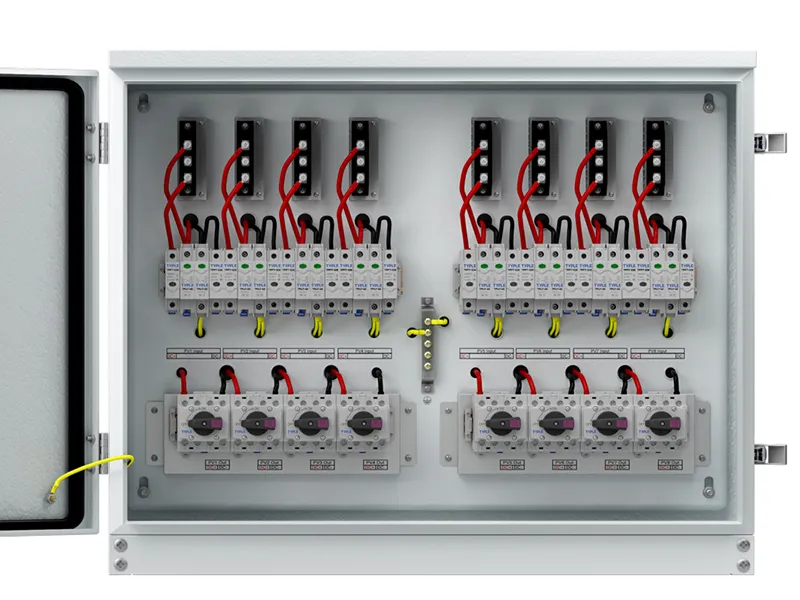
This consolidation simplifies the wiring between the array and the equipment room. A single solar power combiner box replaces a bundle of home-run cables with one feeder pair. The box also gives installers a central point for termination, labeling, and testing. Many designs add fusing, surge protection, and a disconnect switch at that same location.
Main Types of Combiner Boxes
Standard combiner boxes are the most common category. Within it, the solar string combiner handles the output of one inverter input, and it dominates large-scale projects. Array combiners collect several string groups before a single inverter. Buyers also sort these units by system architecture, which yields dc and ac types. A dc combiner box sits between the panels and the inverter; ac combiner boxes sit on the inverter output side.
A second sorting method, types based on features, covers the protection and assembly choices. That group includes fused, non-fused, dual fused, pre-wired, and circuit-breaker-based units. Each type of combiner box suits a different mix of code rules, site conditions, and budget. The sections below compare these types of combiner boxes in detail. They also explain where multi string solar combiner boxes and solar string combiners fit best across solar arrays of different sizes.
Fused, Non-Fused, and Dual Fused Types
Fused Solar Combiner Box
A fused solar combiner box places a fuse on each positive input. Each fuse protects one solar string against reverse current and fault current. The fuse rating sits above the string’s normal operating current and below the current-carrying limit of the cable. This margin lets the string work normally and still clears a fault.
Fused solar combiner boxes suit medium and large solar arrays with many parallel solar strings. A fault in one string can draw current from every other string. The fuse isolates that fault before the cable overheats. Most designs use standard pv string fuses, so replacements stay easy to source. A technician can test and swap a fuse without special tools.
The tradeoff is service work. A blown fuse needs a physical replacement, and the spare must match the original rating. Fused units also need room for the fuse holders inside the enclosure. Many installers accept this cost for the simple, visible protection a fuse provides.
Non-Fused and Dual Fused Boxes
Non-fused solar combiner boxes carry no fuses inside the enclosure. The inputs land on a busbar, and protection comes from devices upstream or downstream. These units fit systems where the inverter includes string-level protection, or where local rules allow external fusing. They cost less and take less space. A non-fused combiner box also removes the risk of a wrong replacement fuse. This type fits small residential systems and retrofit jobs with existing protection.
Dual fused boxes carry two fuse sets instead of one. One set protects the positive conductor, and the second set protects the negative conductor. This design matters on floating arrays and on systems where either conductor can carry fault current. A single fused design protects one polarity only. Dual fused units close that gap and often satisfy stricter local codes. They cost more and need a larger enclosure, so they fit best where the code or the array topology demands full-pole protection.
String combiner boxes in large plants often use the fused or dual fused layout. Smaller jobs lean toward the non-fused design. Each choice follows the fault path, the code, and the maintenance plan for the site.
Pre-Wired and Circuit-Breaker Combiner Boxes
Pre-Wired Combiner Box
A pre-wired combiner box leaves the factory as a finished assembly. The enclosure, busbars, and terminal blocks arrive already mounted and wired. Technicians mount the unit, land the incoming solar strings, and connect the output feeder. Field labor drops sharply compared with a box built on site from loose parts.
Factory assembly also standardizes the components that make up a solar combiner box. A typical pre-wired unit includes string protection, surge protection, a disconnect switch, and monitoring devices. String protection usually takes the form of pv string fuses or resettable devices. Surge protective devices guard the dc bus against voltage spikes from lightning or switching. The disconnect lets a technician isolate the array for service. Monitoring hardware may report string current, bus voltage, or enclosure temperature to a remote system.
Pre-wired units suit projects with tight schedules and repeatable designs. Large rooftop jobs and utility-scale plants often order many identical boxes. The factory builds each one to the same drawing, so every combiner box on site matches. Commissioning moves faster, and spare parts stay consistent across the fleet.
Buyers should confirm the included features before ordering. Some pre-wired models ship without monitoring, and others omit the disconnect. A clear specification sheet prevents gaps at installation.
Circuit-Breaker Combiner Box
A circuit-breaker combiner box uses resettable breakers in place of fuses. Each input or output channel gets a breaker with a defined trip curve. A fault trips the breaker, and a technician resets it by hand after clearing the fault. No spare fuse is needed, and no replacement part sits in a warehouse.
Solar combiner boxes with circuit breakers offer fast recovery after a trip. The reset takes seconds, and the breaker returns to service without new hardware. Breaker-based designs also allow a manual open for maintenance, which doubles as a local isolation point. Some models pair the breakers with arc-fault detection, sold as afci combiner boxes. These units watch for series arcs on the wiring and trip the affected channel.
Breaker units fit sites with limited maintenance access. A remote array or a rooftop with restricted visits benefits from resettable protection. The tradeoff is cost and enclosure size. Breakers take more room than fuse holders, and the trip curve must match the array’s fault current. Installers should check that the breaker rating exceeds the expected string current and stays below the cable limit.
Disconnect combiner boxes often combine breakers with a main switch, which gives one clear point for isolation. This layout suits commercial systems where code requires a visible open point near the array.
Comparing Types and Choosing the Right One
Comparison by Performance, Fit, Compliance, and Cost
The table below sets the main types side by side. Ratings stay qualitative, because exact limits depend on each product’s data sheet.
| Type | Performance | Best fit | Compliance notes | Cost |
|---|---|---|---|---|
| Fused | Clears string faults with a visible, replaceable element | Medium and large solar arrays with many parallel solar strings | Meets common string-protection rules | Moderate; spare fuses needed |
| Non-fused | Relies on protection elsewhere in the circuit | Small residential and retrofit jobs | Needs upstream or inverter protection | Lowest |
| Dual fused | Protects both polarities | Floating arrays and strict local codes | Satisfies full-pole protection rules | Higher; larger enclosure |
| Pre-wired | Factory-built, consistent, fast to commission | Repeatable rooftop and utility projects | Ships to a fixed drawing | Mid to high; labor savings offset it |
| Circuit-breaker | Resettable, doubles as a local isolation point | Sites with limited maintenance access | Trip curve must match fault current | Higher; more space |
Enclosure types used for solar combiners also affect the comparison. Outdoor rated cabinets cost more than indoor models, yet they suit exposed rooftops. A photovoltaic combiner box placed in direct sun needs a suitable rating for heat and rain.
Key Selection Criteria
Start with project size. A single combiner box may serve a small array, while large plants use many units. Next, review the environment. Wet, dusty, or coastal sites call for sealed enclosures and corrosion-resistant hardware.
Then check the code. Local rules decide whether protection must cover one polarity or both. They also set the disconnect and labeling duties. Finally, weigh the budget across the full service life. A fused solar combiner box carries lower upfront cost, and afci combiner boxes add arc-fault detection for extra safety. Pre-wired units trade higher unit price for less field labor.
A short checklist helps: confirm the string count, match the voltage and current ratings, verify the enclosure rating, confirm code compliance, and compare total installed cost. Each type of combiner box fits a defined role, so the right choice follows the project, not a ranking.
Conclusion
Each type of solar combiner box serves a defined role. Standard units anchor most arrays, with string combiners leading large plants. Fused boxes fit medium and large arrays with many parallel strings. Non-fused units suit small residential and retrofit jobs. Dual fused designs protect both polarities on floating arrays and under strict codes. Pre-wired combiner boxes speed repeatable rooftop and utility projects. Circuit-breaker units favor sites with limited maintenance access.
Match the choice to the project. Confirm the string count and the voltage and current ratings first. Check the enclosure rating against the site environment. Verify local code duties for polarity protection, disconnection, and labeling. Compare total installed cost, not unit price alone. These steps point to the right combiner boxes for the job.
FAQ
What does a combiner box do in a solar system?
It merges several solar strings onto one common bus. A single output cable pair then runs to the inverter or charge controller. The unit also gives technicians one central point for termination, labeling, and testing. Many models add fusing, surge protection, and a disconnect at that same spot.
How do I choose between a fused and a non-fused unit?
Check where string protection already lives. A fused combiner box suits arrays with many parallel solar strings, where one fault can draw current from the rest. A non-fused unit fits small residential and retrofit jobs with protection upstream or inside the inverter. Local code decides the final answer.
Can a combiner box work with both dc and ac circuits?
No. A dc combiner box sits between the panels and the inverter, and it handles direct current only. An ac combiner box sits on the inverter output side. The two use different ratings, hardware, and safety rules. Buyers should match the unit to the circuit it will serve.
Why do some projects use pre-wired combiner boxes?
Factory assembly cuts field labor and keeps every unit identical. Pre-wired combiner boxes arrive with busbars, terminals, and protection already mounted. Large rooftop and utility jobs order many matching units, so commissioning moves faster. Buyers should confirm which features ship inside before ordering.
When is a circuit-breaker design the better fit?
Sites with limited maintenance access benefit most. A breaker resets by hand in seconds, and no spare fuse sits in a warehouse. Breaker-based combiner boxes also allow a manual open for service. The tradeoff is higher cost and a larger enclosure.


