Skip image slider
TPF7-32X DC fuse holder with 10x38mm gPV fuse element
TPF7-32 DC fuse holder front view for PV string protection
TPF7-32X DC fuse holder with blown-fuse indicator
gpv fuse link 10x38mm
How to Install a DC Fuse

TPF7-32/32X DC Fuse Holder for Reliable String Protection

DC1000V 1~32A /Fuse element size:10*38mm

The TPF7-32 is a DC fuse holder for solar PV string protection, rated DC 1000V at 1A to 32A, accepting standard 10×38mm gPV fuse links. It provides precise string-level overcurrent protection and fast fault isolation in PV combiner boxes and DC protection assemblies. The TPF7-32X variant adds a blown-fuse indicator light for faster on-site fault location, while keeping the same DC 1000V rating and 10×38mm fuse size. Both are engineered to align with IEC 60269-6, the standard for PV DC fuse links.

Products Categories
Get A Free Quote
Contact Form

Technical data


Model TPF7-32 TPF7-32X
Pole 1P/2P
Rated Current In(A) 1/2/3/4/5/6/8/10/12/15/16/20/25/30/32
Rated Voltage Ue(V) DC1000
Indicator light × √
Flame Retardant Rating UL94V-0
Breaking capacity 33kA
standard 60947-3(unit), 60269-6(link)
FuseSize(mm) 10*38
Housing Material PBT
Operating Temperature -30°Cto+70°C
Humidity ≤95%
Altitude 2000m
Installation 35mmDINRail
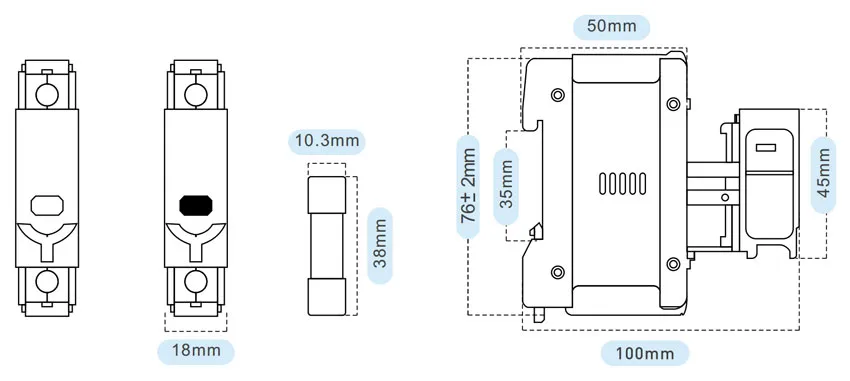
Product Size(mm) 50*18*76

Send us your product model or project requirements — our engineering team will reply with a tailored quotation and confirmed lead time within 24 hours.

TPF7-32(X) DC Fuse with Fuse Holder Applications

  • PV string overcurrent protection.

Installed on each string input inside a combiner box, the TPF7-32 isolates a faulted string within milliseconds, protecting cabling and modules from reverse-current and overcurrent damage in multi-string arrays.

  • Residential and commercial rooftop solar.

The compact 18mm-wide body fits high string-count combiner boxes on a 35mm DIN rail, supporting DC 1000V systems common in rooftop and C&I installations.

  • DC protection assemblies and storage.

Used in DC combiner and distribution assemblies where individual circuit branches need dedicated, replaceable overcurrent protection rated for continuous DC operation.

Dimension-Drawing

Dimension-Drawing-of-TPF7-32-DC-Fuse-holder

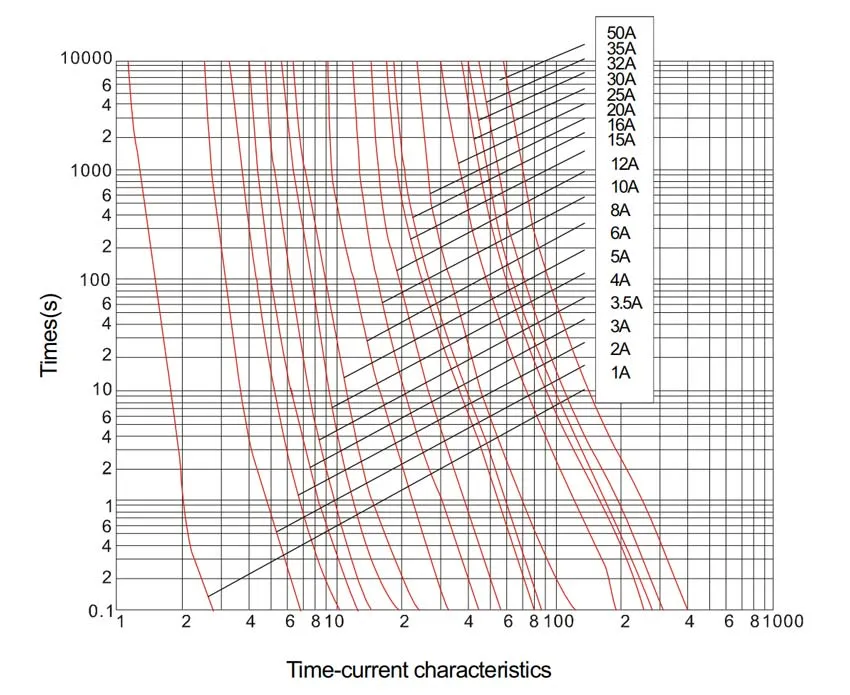
Time-current-characteristic

Time-current-characteristics-of-TPF7-32-DC-fuse

TPF7-32 OEM & Customization

TYPLE supplies the TPF7-32 and TPF7-32X DC fuse holders on an OEM and ODM basis for distributors, combiner box assemblers, and EPC contractors. Available options include current rating selection (1A–32A), 1P or 2P configuration, the 32X blown-fuse indicator version, private-label branding, and matched supply alongside DC SPDs, DC MCBs, and DC isolators for complete combiner box bills of materials. The TPF7-32 is engineered to align with IEC 60269-6, with component test certificates available through TYPLE’s qualified supply-chain partners.

TPF7-32-fuse holder Key Selling Points
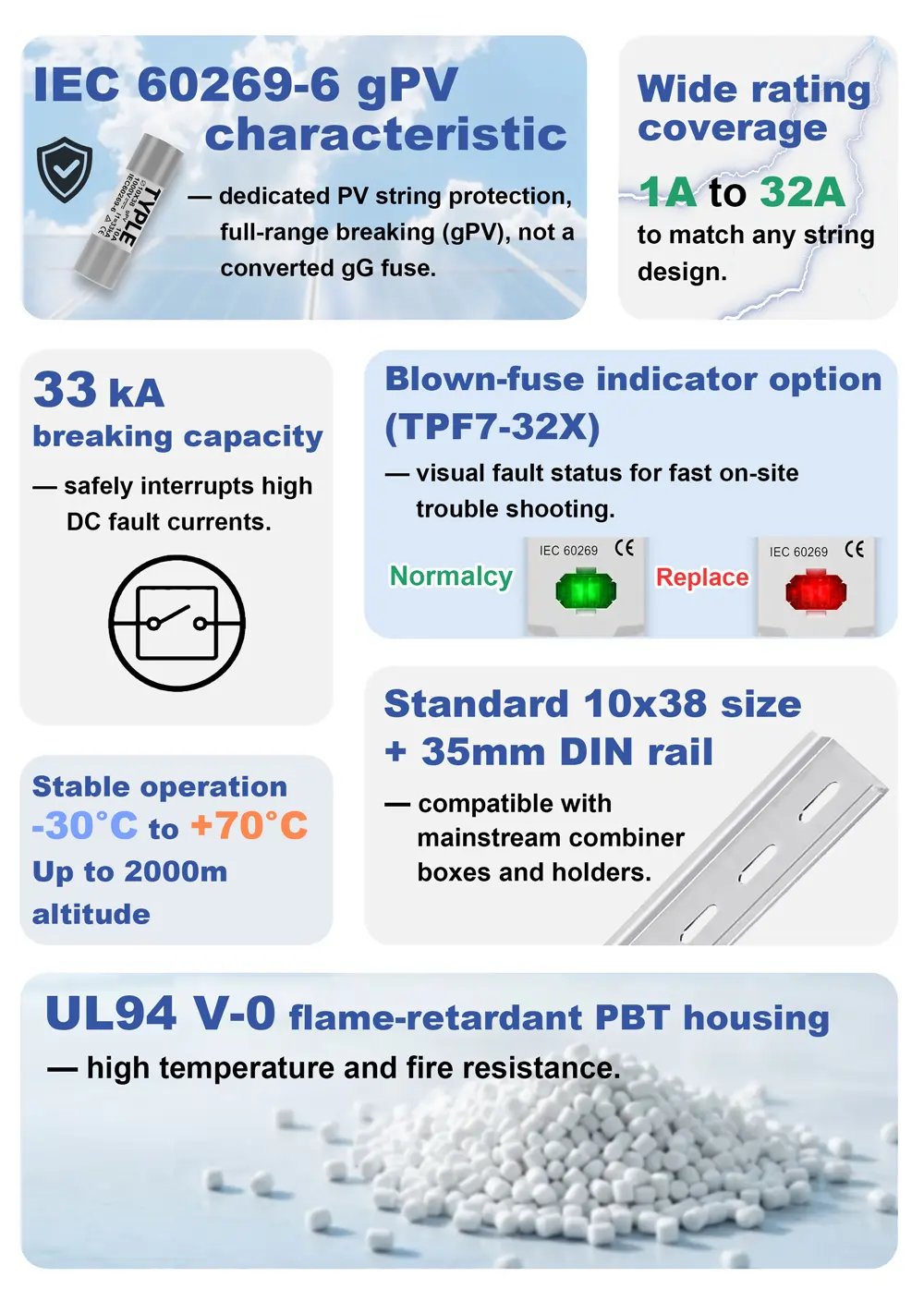
TPF7-32-fuse holder Key Selling Points

FAQs

What is the difference between TPF7-32 and TPF7-32X?

Both are DC 1000V fuse holders accepting 10×38mm fuse links rated 1A to 32A. The TPF7-32X adds a blown-fuse indicator light that signals when a fuse has operated, allowing faster fault location during maintenance. The TPF7-32 has no indicator. Electrical ratings are otherwise identical.

Can I use a regular AC fuse in a DC solar combiner box?

No. DC fuses require a gPV-class fuse link rated for DC operation, because DC arcs have no natural zero-crossing and need a fuse element specifically designed to interrupt DC fault current. The TPF7-32 uses 10×38mm gPV fuse links engineered to align with IEC 60269-6 for PV applications.

What current rating do I need for each PV string?

Fuse rating is selected according to the module’s maximum series fuse rating and string short-circuit current, typically between 1A and 32A. A common rule is to size the fuse at roughly 1.5 times the string short-circuit current (Isc), staying within the module datasheet’s maximum series fuse value.

Does every string in a combiner box need a fuse?

String fusing is required when three or more strings are connected in parallel, because a faulted string can receive reverse current from the others that exceeds the module’s safe limit. For one or two parallel strings, fuses may not be mandatory, but they are still commonly specified for fault isolation.

Related Products

Related News

A practical procurement checklist for EPC contractors and distributors to fast-track their PV combiner box commercial quotations from China.
DC600V or DC1000V combiner box? Compare voltage ratings, system size, string count and cost to choose the right PV combiner box for your solar project.
What a solar combiner box is, what’s inside it, and how to choose one — a complete guide to PV combiner box sizing, components, and applications.
Scroll to Top

Get Your Quote Within 24 Hours

Contact Form
Our engineering team will reply with a tailored quotation and confirmed lead time within 24 hours.
Get A Free Quote

Get Your Quote Within 24 Hours

Contact Form (#6)
Our engineering team will reply with a tailored quotation and confirmed lead time within 24 hours.
Get A Free Quote