
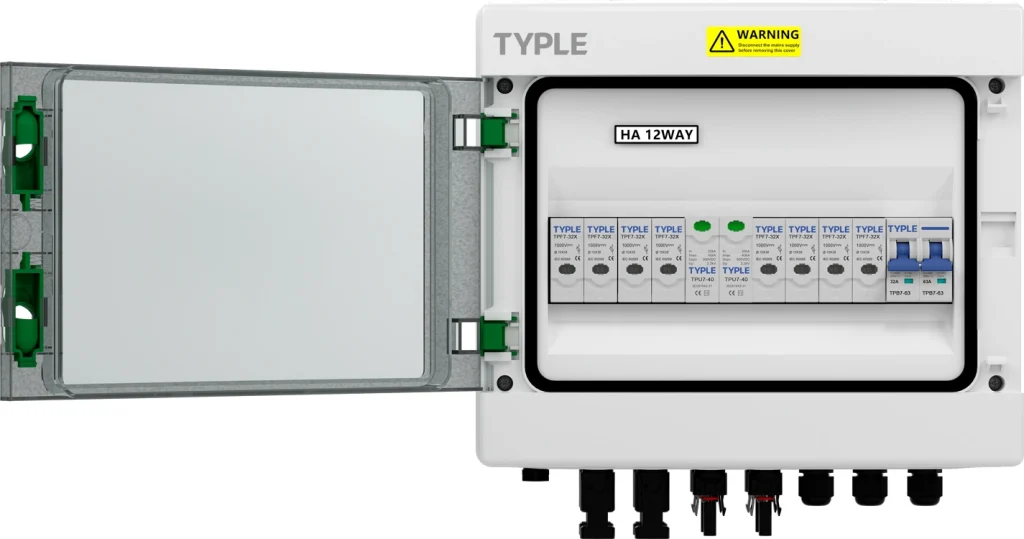
You need a solar combiner box when multiple photovoltaic strings must be brought together into a smaller number of output circuits before reaching an inverter, charge controller or downstream distribution equipment. It provides an organized connection point and may also contain string overcurrent protection, surge protection, isolation and monitoring devices.
However, not every solar installation needs a separate combiner box. A small array with one string—or a few strings connected directly to dedicated inverter inputs—may already have the necessary combining and protection functions built into the inverter.
The decision should therefore be based on the electrical architecture, number of parallel strings, inverter inputs, conductor routing and applicable installation rules rather than system capacity alone.
What Does a Solar Combiner Box Do?
Solar modules are normally connected in series to create strings. Multiple strings may then be connected in parallel to increase the array current.
A DC solar combiner box receives these string circuits and combines them into one or more DC output circuits. Instead of running every string separately over a long distance to the inverter, the installer can route the strings to a nearby combiner and use larger output conductors for the remaining distance.
Depending on the design, the box may contain:
- String fuses or DC circuit breakers
- A DC disconnect or isolating switch
- DC surge protective devices
- Positive and negative busbars
- Monitoring modules and current sensors
- Grounding or earthing terminals
- Cable glands and touch-safe terminals
The combiner box does not increase the power generated by the panels. Its purpose is to organize circuits, coordinate protection and simplify downstream wiring.
When Is a Combiner Box Usually Needed?
The Array Has Multiple Parallel Strings
As the number of strings increases, landing every circuit directly at the inverter becomes less practical. A combiner provides a defined location for connecting, labeling, protecting and maintaining the circuits.
The need for string overcurrent protection is not determined by string count alone. Designers must evaluate the possible reverse current from other parallel strings and compare it with the module’s maximum series fuse rating and the requirements of the applicable electrical standard.
Three or more parallel strings often trigger closer attention to string-level overcurrent protection, but this should not be treated as a universal rule for every module and jurisdiction.
The Inverter Has Fewer Inputs Than the Array Has Strings
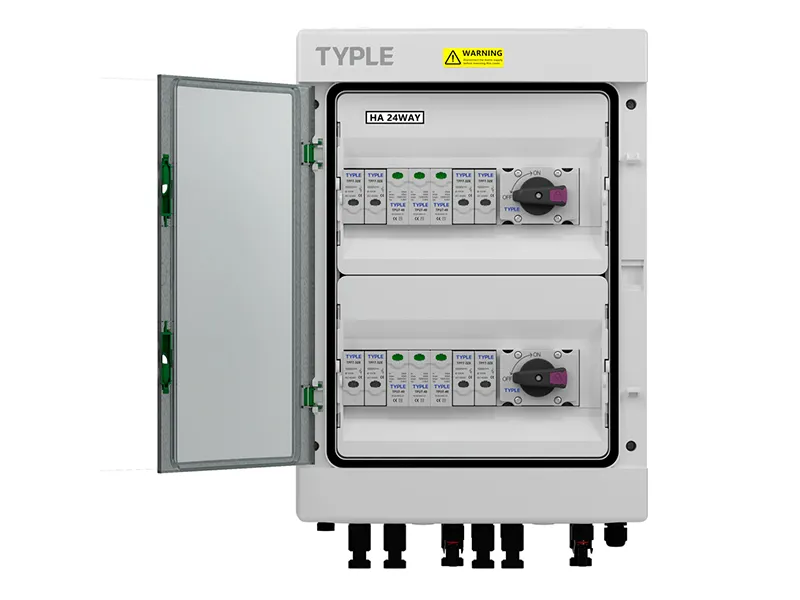
Suppose an array has eight strings, but the inverter accepts only two combined DC inputs. A combiner box can divide the eight strings into two groups and deliver one combined output from each group.
The strings connected in parallel should have compatible electrical characteristics, including similar module type, string length, orientation and expected operating conditions. Combining mismatched strings can cause performance losses even when the wiring fits physically.
String-Level Protection or Isolation Is Required
A combiner box creates a practical location for string fuses, breakers, surge protection and disconnection.
This can be important in large rooftop, ground-mounted and utility-scale systems where technicians need to isolate individual array sections or identify a fault without disconnecting the entire PV field.
The Cable Runs Need to Be Consolidated
Running many individual string cables over a long distance can increase cable quantities, support requirements and installation complexity. A properly positioned combiner can reduce the number of long outgoing circuits.
This does not automatically mean lower total cost. Larger output conductors, voltage drop, enclosure placement and maintenance access must also be evaluated.
The Project Requires String Monitoring
Monitored combiner boxes can measure the current of individual strings and send operating data to a supervisory system. This helps maintenance teams identify underperforming strings, blown fuses and abnormal current patterns.
Monitoring is more useful in large arrays, where manually checking hundreds of string circuits would be inefficient.
When Might You Not Need a Separate Combiner Box?
A Single-String Solar Array
A one-string system has nothing to combine. The string may connect directly to a compatible inverter or charge controller, subject to the required disconnecting and protective devices.
Installing a separate combiner in this situation may add cost and connection points without providing a meaningful benefit.
A Small Inverter with Dedicated String Inputs
Many modern string inverters include multiple DC inputs, maximum power point trackers, DC disconnects and internal surge protection options. If every string connects to a suitable input and the inverter provides the required functions, an external combiner may be unnecessary.
Always verify the inverter manual. Two connectors on an inverter do not necessarily represent two independent MPPT channels, and the permitted input current may differ between terminals and trackers.
Microinverter-Based Systems
Microinverters convert module-level DC electricity into AC power near the panels. These systems generally do not use a traditional DC string combiner.
Multiple microinverter branch circuits may instead be combined on the AC side using an AC combiner panel or distribution enclosure. That equipment must be rated for the AC voltage, current, frequency and fault conditions.
Systems Using Distributed Power Electronics
Some optimizer-based systems still use conventional DC strings and may require a DC combiner. Others connect directly to inverter inputs. The presence of optimizers alone does not determine whether a combiner box is necessary.
The correct arrangement depends on the equipment manufacturer’s approved system architecture.
Five Questions to Ask Before Deciding
Use the following questions to determine whether a separate combiner is justified:
- How many strings will operate in parallel?
- How many string inputs and MPPT channels does the inverter provide?
- Is string-level overcurrent protection required?
- Are external isolation, surge protection or monitoring functions needed?
- Would combining the strings reduce cable complexity without creating excessive voltage drop?
A “yes” to only one question does not always settle the decision. The functions may already be provided by the inverter or another piece of switchgear.
Combiner Box or Junction Box?
A basic junction box mainly provides an enclosure in which conductors are connected. A solar combiner box is designed for combining PV circuits and commonly incorporates electrical protection, isolation or monitoring.
The distinction matters because DC PV systems can operate at high voltage and continue producing power whenever sufficient sunlight is present. A general-purpose junction enclosure should not be assumed suitable for PV combining merely because the cables fit inside it.
The enclosure, terminals, busbars, protective devices and cable entries must all be suitable for the intended DC conditions and environment.
Final Decision
A separate combiner box is usually appropriate when a solar array has more strings than the inverter can accept directly, requires string-level protection, needs field isolation or monitoring, or benefits from cable consolidation.
It may not be necessary for a single-string array, a small system connected directly to protected inverter inputs, or a microinverter installation that combines circuits on the AC side.
The safest approach is to assess the entire circuit rather than purchasing a box based only on the number of panels. Confirm the string configuration, maximum voltage, available fault current, inverter input arrangement, conductor ratings and local electrical requirements before final selection.


